Your next buying step
Slime Tire Inflator XL 40090
Model: Tire Inflator XL / 40090 · US configuration
Your choices from the finder
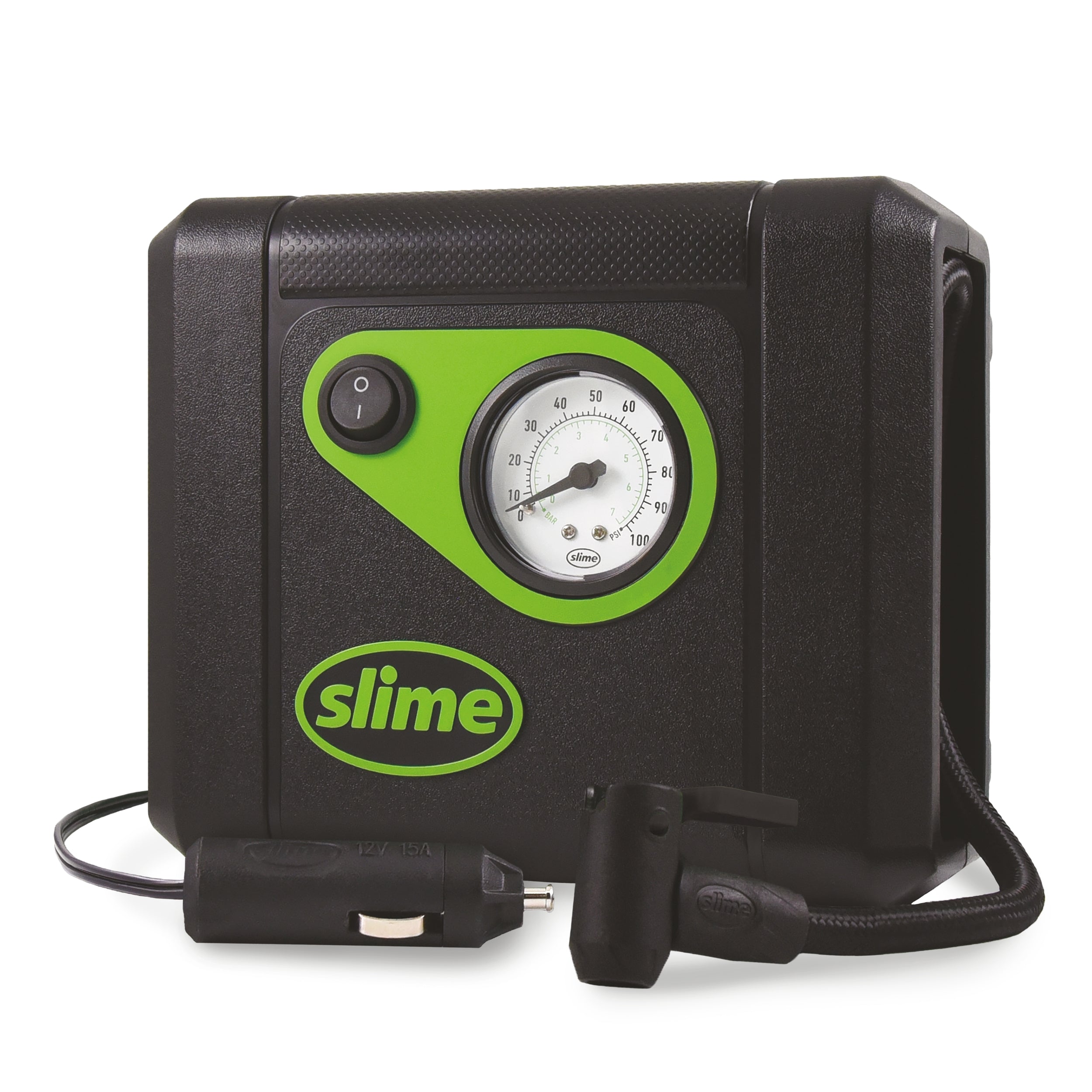
Review the product, then choose a seller
Compare offers for this model
Consider the analog 40090 if a socket-fed manual-pressure setup matches your use and outlet. Its model-specific manual documents a press-on tire head and 15A minimum outlet; the reviewed sources do not document a user-selected target stop.
Search this model on Amazon ↗Compare the exact model, package, seller, current price and return terms. Search results can include other versions.
As an Amazon Associate I earn from qualifying purchases. This is an affiliate link.
Assessment scenario: Socket-powered car inflation with manual pressure control
Assessment scenario for someone who wants Slime’s 12V Tire Inflator XL and is comfortable watching an analog dial rather than requiring a target-pressure stop. The manual’s 5/6/7-minute examples cover three named tire sizes from 0 to 35 PSI; confirm the car outlet meets the 15A minimum and check package-specific adapters.
Explore this buying guide ↗Why consider this model?
- The exact manual identifies 40090, a 12V outlet route, analog 0–100 PSI dial and 1.2 CFM at 0 PSI.
- Manual maker examples are 5/6/7 minutes for P205/55R16, P235/60R18 and P275/55R22 from 0 to 35 PSI; separate top-offs are 30/60/90 seconds from 30 to 35 PSI.
- The exact model has 11.8 feet stated total reach and documented press-on tire and ball/inflatable adapters.
Tradeoffs to weigh
- The manual requires a 15A minimum outlet and separately lists a 15A plug fuse; neither is a verified pump current draw.
- Analog manual-control operation is not a documented selected-pressure stop; 0–100 PSI dial scale is not a working-pressure ceiling or gauge-accuracy statement.
- Manual limits continuous use to 10 minutes, calls for 25–30 minutes cooling after excessive use and says not to leave the unit unattended. It cautions about small balls.
Check these before ordering
- Confirm the exact 40090 SKU, package contents and outlet rating before purchase.
- Compare the actual tire size and task with the manual examples; they are manufacturer scenarios, not comparative tests.
- Use the vehicle’s placard pressure, remain present and verify final pressure with an appropriate tire gauge.
